
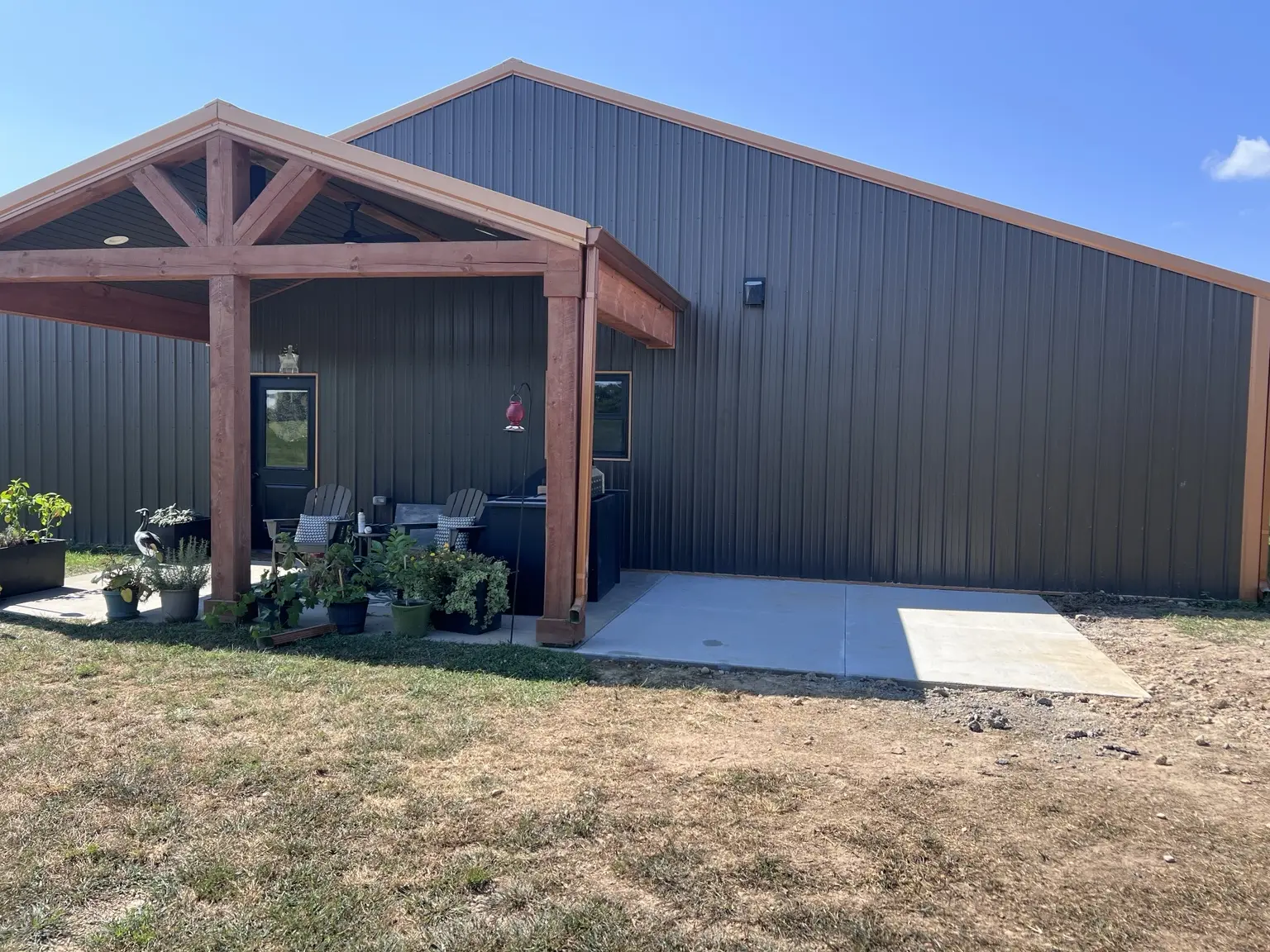
Concrete does not rot or develop wood splinters
Wood brings warmth and character to a backyard, but outdoor exposure makes it expand and contract as moisture conditions change. The USDA Forest Products Laboratory explains that neglected wood decks can develop cracks, raised grain and mildew, increasing the risk of decay and insect damage. Suitable lumber, protective finishes and maintenance help manage those risks.
Concrete is not subject to wood rot or wood-eating insects. A patio also has no deck boards to splinter or replace. That removes several reasons a wood deck might need repairs over time. Concrete can still crack, stain, settle or suffer surface damage, so the material alone does not guarantee a longer life.
Less recurring surface maintenance
A wood deck needs a care plan suited to its lumber, finish and exposure. That may include cleaning, renewing a stain or water-repellent finish, dealing with rough boards and checking the condition of connections and supports. The schedule varies; a shaded, damp deck and a sunny, sheltered deck do not weather the same way.
A concrete patio generally needs routine cleaning, attention to drainage and occasional inspection for changes in the surface. It does not require wood stain or sanding. A decorative finish or sealer may need periodic renewal according to its product instructions, so ask what upkeep your chosen finish involves before making the decision.
Missouri winters make installation count
Concrete durability starts below the surface. Consistent support, base preparation, planned drainage, appropriate joints and careful placement all affect the finished patio. A beautiful slab over poorly prepared ground can still move or settle.
Freezing and thawing are another concern. The National Ready Mixed Concrete Association explains that saturated concrete exposed to freeze-thaw cycles can develop surface scaling. An appropriate air-entrained mix, sound finishing and curing practices, and careful use of deicing products help reduce that risk. Concrete earns its long-term advantage through the complete installation and care plan.
Compare the cost of ownership
The initial estimate is only part of the comparison. Think about the time and expense of cleaning, finishes, repairs and eventual replacement. For a homeowner who wants a straightforward ground-level seating or grilling area, avoiding repeated wood-finishing work can make concrete an appealing choice.
There is no honest universal payback number. Size, access, demolition, grading, finish and structural requirements all change the cost. Compare estimates that describe the full scope, then ask each contractor to explain the expected maintenance. A cheaper installation that leaves drainage or preparation unresolved may create expensive problems later.
A deck can still be the right choice
A raised doorway, steep yard or desire for an elevated view may favor a deck. Properly built and maintained wood decks can provide decades of use, as the USDA publication notes. This comparison does not establish that every concrete patio will outlast every deck.
Composite decking also deserves a separate comparison. It is a different surface material, and its care requirements depend on the product. Deck framing, stairs, railings and connections still need consideration. Choose the outdoor space that fits the property, your preferred appearance and the maintenance you are comfortable taking on.
Plan a patio around your property
For homeowners in Springfield, Nixa, Ozark and surrounding Southwest Missouri communities, a useful patio estimate begins with the site. Cleveland Concrete can review the proposed layout, existing surface, yard elevations and equipment access before defining the work.
Bring your plans for seating, a grill, steps or a future covered area. Discuss heavy features and any required foundations before the pour. Getting those details into the original plan gives your patio a better starting point for years of everyday use.
Explore our concrete patio services